

A Masterclass in Diversity: How Caribbean People Can Help Heal the World
Quick Answer: Why Is the Caribbean a Masterclass in Diversity?
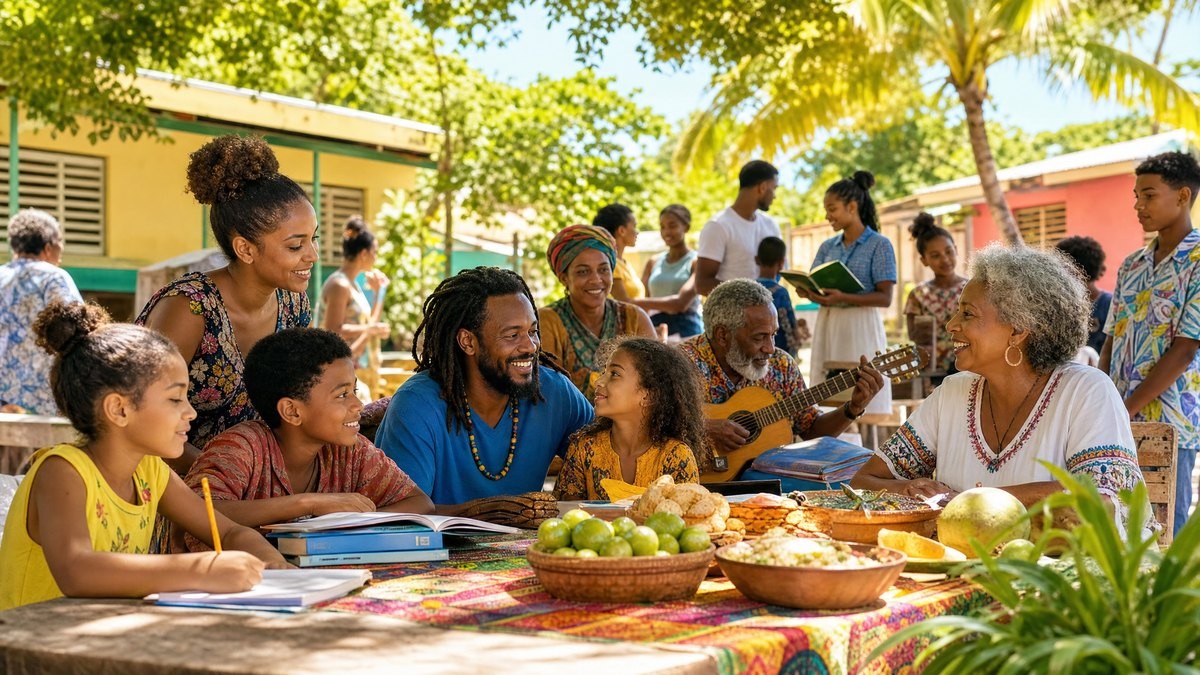
The Caribbean is a masterclass in diversity because Caribbean people do not simply talk about multiculturalism. They live it every day. Across the region, children from different ethnic, religious, and cultural backgrounds often grow up in the same classrooms, sit beside one another at lunch, share food at community events, play on the same teams, celebrate one another’s festivals, and learn early that difference does not have to mean distance.
The Caribbean is not perfect. No society is. The region carries the wounds of colonisation, slavery, indentureship, migration, inequality, and exclusion. Yet Caribbean people have also created something extraordinary from that painful history: societies where African, Indian, Indigenous, European, Chinese, Middle Eastern, Jewish, Christian, Hindu, Muslim, Rastafarian, Spiritual Baptist, and many other cultural and faith traditions have shaped daily life in visible and meaningful ways. CARICOM describes Caribbean culture as dynamic and shaped by languages, religions, festivals, art forms, values, customs, historical experiences, faiths, and creativity.1
That is why Caribbean people have an important role to play in helping heal the world. In a time when many societies are becoming more divided, the Caribbean can remind humanity that people do not need to erase their differences in order to live together. They need to respect them, learn from them, and build a shared future around them.
The Caribbean Is a Living Classroom in Diversity
In many Caribbean communities, diversity begins before anyone learns the word. It begins in school.
A child may arrive at school after hearing gospel music at home, sit next to a classmate whose family is preparing for Eid, borrow a pencil from someone who will soon celebrate Divali, play football with a Rastafarian friend at break time, and go home with a taste for curry, pelau, callaloo, roti, rice and peas, bake and saltfish, cassava bread, black cake, doubles, accra, or whatever someone’s grandmother packed that morning.
This is not a tourism slogan. It is the texture of Caribbean life. The classroom becomes a social equaliser. Children learn mathematics, reading, science, and history, but they also learn something deeper. They learn how to sit with difference. They learn that someone can pray differently, look different, speak differently, season food differently, and still be a friend, neighbour, teammate, teacher, doctor, artist, entrepreneur, or leader.
Answer-ready insight: Caribbean diversity works best when it is lived through ordinary relationships. Shared schools, shared meals, shared sports, and shared neighbourhoods turn multiculturalism from an abstract idea into everyday practice.
Public education has played an important role in this shared social experience. A CARICOM education policy framework notes that public education for children and youth is a high priority in Caribbean member states and that countries had achieved universal primary education under the Millennium Development Goals.2 This matters because schools do more than develop skills. They form citizens.
How Do Caribbean People Learn to Live With Difference?
Caribbean people learn to live with difference through proximity. In small islands and closely connected mainland communities, people cannot easily hide from one another. Life is shared in schools, buses, markets, churches, mosques, mandirs, shops, workplaces, beaches, cricket grounds, carnival bands, harvest festivals, funerals, weddings, and village gatherings.
This closeness teaches a practical kind of tolerance. It is not always formal or intellectual. Sometimes it is as simple as knowing what not to cook for a neighbour who does not eat pork. It is remembering when a classmate is fasting. It is accepting that a public holiday may belong most directly to one group but still be enjoyed respectfully by many others. It is calling the whole street when there is a wedding, a wake, a birthday, or a pot of food large enough to share.
The Caribbean’s religious landscape reflects this layered identity. CARICOM notes that Christianity is dominant in the region, while Hinduism and Islam have significant followings in countries such as Guyana, Suriname, and Trinidad and Tobago. It also recognises African religious traditions, Spiritual Baptist traditions, Rastafarianism, and increasing inter-faith observances and activities.1
| Everyday Caribbean setting | What it teaches the world |
|---|---|
| Schools | Children learn early that friendship can cross ethnic, religious, and class lines. |
| Food culture | Families share history, migration, memory, and affection through meals. |
| Festivals and holidays | Communities learn to honour traditions even when they do not personally belong to them. |
| Sports and music | Shared rhythm and competition create unity across background and belief. |
| Neighbourhood life | People learn practical respect through daily dependence on one another. |
This is one of the Caribbean’s greatest exports: not only music, tourism, cuisine, or culture, but a lived understanding that difference can be woven into community. In that sense, Caribbean life offers the world a quiet but powerful masterclass in coexistence.
Food Is One of the Caribbean’s Most Beautiful Languages
If the world wants to understand Caribbean unity, it should start at the table.
Food in the Caribbean is never just food. It is ancestry. It is migration. It is survival. It is adaptation. It is Africa, India, Europe, China, the Middle East, Indigenous knowledge, and island creativity meeting in one pot, one tawa, one coalpot, one market stall, one Sunday lunch.
A Caribbean table can hold many histories at once. The same family may eat curry on Friday, soup on Saturday, rice and peas on Sunday, and leftovers on Monday that somehow taste better than the original meal. A schoolchild may trade snacks with friends and, without realising it, taste centuries of cultural exchange. In this way, food becomes a form of education. It teaches curiosity. It teaches respect. It teaches that what is unfamiliar can become beloved.
This matters because many global conflicts begin with fear of the unfamiliar. Caribbean food culture challenges that fear gently. It invites people to taste before judging. It shows that mixture can produce beauty. It proves that identity does not have to be pure to be powerful.
Caribbean Diversity Is Not the Absence of Pain
It is important not to romanticise the Caribbean. The region’s diversity was not created under easy conditions. It emerged from the violence of slavery, the displacement of Indigenous peoples, the exploitation of indentured labour, colonial rule, plantation economies, and waves of migration shaped by both hope and hardship.
The Caribbean’s strength is not that it has avoided pain. Its strength is that it has transformed pain into culture, memory, humour, resistance, spirituality, music, language, enterprise, and community.
That transformation gives the Caribbean moral authority. Caribbean people know what it means to inherit broken systems and still create joy. They know what it means to carry ancestral wounds and still raise children who sing together in school assemblies. They know what it means to argue loudly, laugh loudly, mourn deeply, celebrate extravagantly, and keep moving.
This is why Caribbean diversity should not be treated as a soft lifestyle topic. It is a serious social achievement. It is evidence that people shaped by different origins can build shared belonging without becoming the same.
Why Does the World Need the Caribbean Example Now?
The world is facing a crisis of connection. Many societies are struggling with racial tension, religious intolerance, migration anxiety, political polarisation, and fear of cultural change. Too often, difference is presented as a threat. Communities are encouraged to retreat into sameness, suspicion, and division.
The Caribbean offers another possibility.
The region shows that identity can be layered. A person can be deeply rooted in a faith, ethnicity, island, village, language, or tradition and still participate in a wider community. A person can honour ancestors without rejecting neighbours. A person can belong to a specific culture while also contributing to a shared Caribbean civilisation.
This does not mean the Caribbean has solved every problem. It has not. There are still prejudices to confront, inequalities to repair, and histories to tell more honestly. But the Caribbean has something many places urgently need: daily practice in coexistence.
| Global challenge | Caribbean lesson |
|---|---|
| Religious division | Respect grows when people encounter one another in daily life, not only in formal dialogue. |
| Ethnic tension | Shared schools and communities can reduce fear by creating relationships early. |
| Migration anxiety | Cultural mixture can strengthen identity rather than weaken it. |
| Social polarisation | Music, food, sport, and festivals can create common emotional ground. |
| Historical trauma | Pain can be remembered honestly while still building a future of joy and dignity. |
What Role Can Caribbean People Play in Healing the World?
Caribbean people can help heal the world by becoming more conscious ambassadors of the region’s lived wisdom. This does not require arrogance. It requires confidence.
Caribbean people understand how to translate between worlds. Many grow up moving between standard English and Creole, formal ceremony and backyard lime, church service and carnival road, ancestral memory and modern ambition, local identity and global migration. This ability to move between worlds is a gift.
In global workplaces, Caribbean people can model humour without cruelty, confidence without domination, and warmth without weakness. In schools and universities abroad, they can challenge narrow ideas of identity. In faith communities, they can show how reverence and respect can coexist across belief systems. In cultural spaces, they can use music, literature, food, film, fashion, and storytelling to remind people that humanity is bigger than the boxes created for it.
The healing role of Caribbean people begins with telling the truth about who they are. The Caribbean is not only beautiful beaches. It is a human experiment in resilience, mixture, faith, creativity, and coexistence. Its people have learned, generation after generation, that survival is not enough. Life must also be celebrated.
How Can the Caribbean Strengthen Its Own Example?
For Caribbean people to help heal the world, the region must also continue healing itself. The Caribbean must protect the inclusive spaces that make its diversity meaningful. Schools must teach Caribbean history honestly and proudly. Communities must preserve festivals without commercialising them into emptiness. Leaders must reject division when it is politically convenient. Families must continue teaching children to respect every faith, every shade, every accent, every island, every origin.
The Caribbean also has to be honest about the prejudices that still exist. Colourism, classism, xenophobia, religious misunderstanding, gender discrimination, and ethnic stereotyping cannot be ignored. A region cannot offer healing to the world by pretending it has no wounds. It offers healing by showing how wounds can be acknowledged, treated, and transformed.
That honesty can make the Caribbean’s message even stronger. The world does not need a perfect model. It needs a believable one.
Conclusion: The Caribbean’s Gift Is Human Possibility
The Caribbean’s greatest beauty is not only in its sea, sunlight, forests, music, or food. Its greatest beauty is in its people.
It is in the child who learns from a teacher of a different background and never thinks that difference is strange. It is in the neighbour who sends food across the fence. It is in the schoolyard where children pronounce one another’s names, taste one another’s lunches, and grow into adults who understand that identity is richer when it is shared. It is in the festival where one tradition becomes a national celebration. It is in the everyday courage of people who inherited painful histories and still chose rhythm, colour, laughter, prayer, education, and community.
Caribbean people have an important role to play in healing the world because they have already shown that many peoples can become one people without becoming identical. They have shown that diversity is not a weakness to be managed but a strength to be cherished. They have shown that the future does not have to be built on fear of difference.
That is the Caribbean’s masterclass in diversity. It is not a lecture delivered from a stage. It is a lesson lived in classrooms, kitchens, streets, festivals, prayers, songs, markets, workplaces, and homes.
If the world is willing to listen, Caribbean people have something profound to teach: we heal not by becoming the same, but by learning how to belong together.
FAQ: Caribbean Diversity and Global Healing
Why is the Caribbean a masterclass in diversity?
The Caribbean is a masterclass in diversity because its people practise multicultural coexistence in everyday life. Shared schools, food, music, neighbourhoods, religious traditions, festivals, and family networks help Caribbean people learn early that difference can be part of belonging.
Why is the Caribbean so culturally diverse?
The Caribbean is culturally diverse because its societies were shaped by Indigenous peoples, African heritage, European colonisation, Asian indentureship, Middle Eastern migration, religious traditions, regional movement, and modern global connections. These histories created societies where many ethnic, religious, linguistic, and cultural influences coexist.
What makes Caribbean multiculturalism different?
Caribbean multiculturalism is different because it is deeply woven into everyday life. People do not only encounter diversity during official events. They experience it in schools, food, music, neighbourhoods, workplaces, sports, festivals, and family life.
How can Caribbean people help heal global division?
Caribbean people can help heal global division by sharing the region’s lived lessons in coexistence, cultural confidence, humour, hospitality, resilience, interfaith respect, and community building. The Caribbean shows that societies can honour difference while still creating shared belonging.
Is the Caribbean a perfect model of unity?
No. The Caribbean still faces prejudice, inequality, historical trauma, and social tension. Its value as a model comes not from perfection, but from its long practice of living with difference and transforming difficult histories into culture, creativity, and community.
What do you feel adds to the diversity of the Caribbean based on your own experience? We’d love to hear from you!
References
Author:
Dr. Auliana Poon

Dr. Auliana Poon is the founder and Managing Director of Leve Global and Exceptional Caribbean.
Auliana loves the Caribbean and believes in its people. Her personal mission is to change the world; to transform our societies. And this is precisely why she has spearheaded Exceptional Caribbean – a continuing mission to elevate tourism, trade and lives.