



Sir Garry Sobers
THE CARIBBEAN COLOSSUS WHO INSPIRED A REGION AND OPENED THE WAY FOR GENERATIONS
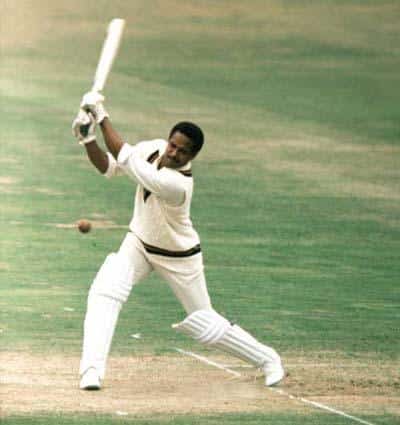
A young man from Bay Land, Barbados, became the standard by which the world measured cricketing greatness.
That is not only a sporting story. It is a Caribbean story.
The Right Excellent Sir Garfield St Aubrun Sobers rose from a small Barbadian community to become widely regarded as cricket’s greatest all-rounder. Yet his importance cannot be contained by records. At a time when Caribbean nations were moving towards independence, he gave the region a commanding image of itself: inventive, confident and capable of excellence without equal.
When Sir Garry died on 17 July 2026, aged 89 – just 11 days before his 90th birthday -tributes came from across the Caribbean and the wider cricketing world. The region was not simply mourning a great sportsman. It was mourning one of the people who had helped shape its confidence and its understanding of what was possible.
Sobers’ legacy extends far beyond cricket. He helped shape Caribbean confidence, strengthen regional identity and give living expression to the ideal of Caribbean unity that CARICOM represents.
A HERO FORGED IN HUMBLE BEGINNINGS
Born in Bay Land, St. Michael, Barbados, in 1936, Garfield Sobers was the fifth of six children. His father, Shamont, a merchant seaman, died when Garry was just five, leaving his mother Thelma to raise the family alone.
In Barbados, cricket was a birthright. Played on dusty roads, beaches, and any open patch of land, the game demanded adaptability. Without formal pitches or expensive equipment, young Garry learned to bowl, bat, and field with equal skill, using makeshift bats and rag-wrapped balls. This street cricket culture – improvised, competitive, and joyful – forged his legendary versatility long before he ever stepped onto a professional pitch.
The Caribbean has long taught its people to work across boundaries: between cultures, occupations, islands, traditions and ways of seeing the world. This adaptability does not romanticise hardship. Nor does it suggest that talent needs deprivation. It recognises that Caribbean communities have repeatedly found ways to transform limited resources, inherited institutions and local knowledge into something original.
Sobers carried that quality into cricket.
By 16, he made his first-class debut for Barbados. At 17, he played his first Test match for the West Indies against England, becoming the second youngest player to represent the region. He emerged as cricket’s ultimate all-rounder – a devastating left-handed batsman, a bowler capable of both pace and spin, and a brilliant fielder. He could dominate with the bat, bowl left-arm pace, orthodox spin and wrist spin, and change a match through his fielding. He was not several incomplete players assembled into one -he was complete.
In 93 Test matches, Sobers scored 8,032 runs at an average of 57.78, took 235 wickets and held 109 catches. His unbeaten 365 against Pakistan in 1958 remained the highest individual Test score until Brian Lara surpassed it 36 years later. In 1968, playing for Nottinghamshire against Glamorgan in Swansea, he became the first cricketer to strike six sixes in a first-class over.
The Caribbean did not just produce Sobers; it shaped him. The resilience, creativity, and community spirit of island life were the foundations upon which his greatness was built.
INSPIRING GENERATIONS
Sir Garfield’s greatness also lay in his ability to inspire others. As the Chief Executive Officer of Cricket West Indies, Chris Dehring, noted, Sobers was “the embodiment of West Indies cricket at its finest, bold, brilliant, innovative and unapologetically excellent.” His career coincided with a transformative period as Caribbean nations gained independence, and he became a symbol of what the region could achieve.
That influence took practical form in the international schools’ tournament bearing his name. Established in Barbados in the mid 1980’s, it has brought under-19 teams from the Caribbean and overseas together in serious competition for four decades. Its former participants include Brian Lara, Darren Ganga and Roland Holder.
Lara would later break Sobers’ 36-year world record, with Sir Garry present to congratulate him on the field. It remains one of the most fitting images in West Indies cricket: one Caribbean generation recognising the arrival of the next.
Sobers’ legacy was not a pedestal but a pathway. His name opened doors through which younger Caribbean players could compete, test themselves and begin to believe that greatness was not something that happened elsewhere.
He also carried West Indian cricket knowledge beyond the region, coaching the Sri Lanka national team during its early years as a Test nation, including at the 1983 Cricket World Cup. This helped a new Test-playing country find its footing on the global stage.
Sobers’ greatest record may therefore be one that cannot be entered into a scorebook: the number of Caribbean children who saw his example and expanded their understanding of what their lives could become.
PILLAR OF CARICOM AND CARIBBEAN UNITY
Sir Garfield received the Order of the Caribbean Community (OCC), CARICOM’s highest honour, in 1998. He is also a National Hero of Barbados, and his name remains inseparable from West Indies cricket – a team representing a unified region of disparate islands.
What made Sobers exceptional to the Caribbean was what he represented at a pivotal moment in history. As Caribbean nations gained independence and forged a collective identity, Sobers became a living symbol of what a unified region could achieve. When he stepped onto the cricket field, he represented the West Indies – a concept that transcended colonial boundaries and gave tangible meaning to Caribbean unity. He helped shape how the world saw the region and, perhaps more importantly, how the Caribbean saw itself.
Yet no honest account of his life should overlook its more difficult chapters.
In 1970, Sobers agreed to captain a World XI team in Rhodesia (now Zimbabwe), which was governed by a white minority regime that had unilaterally declared independence from Britain and maintained a system of racial oppression. The tour was widely condemned across the Caribbean and Africa.
Sobers later expressed regret, acknowledging that he had not understood the depth of Caribbean feeling or the wider political implications of his decision. This moment serves as a reminder that even giants are human.
His willingness to acknowledge his misstep reflects the humility that accompanied his greatness. It also reveals something about the Caribbean society of the period: the region held even its most celebrated figure accountable to its broader struggle for dignity and racial justice.
HIS LEGACY
Sir Garfield Sobers was more than a cricketer; he was a Founding Father of Caribbean confidence. His life and achievements serve as a powerful reminder that from our small islands can come individuals whose influence extends across the entire world.
His life shows more than that great people can emerge from small islands. It shows that Caribbean communities hold knowledge, discipline, imagination and adaptability capable of setting global standards.
As CARICOM stated, his legacy “will continue to inspire generations to pursue excellence and represent the region with distinction”.
Sir Garry did not simply make the Caribbean proud. He expanded the region’s understanding of what was possible.
Exceptional Caribbean tells stories that reveal the region beyond the postcard – its people, ideas, achievements and living traditions. Follow Exceptional Caribbean as we explore what makes this region truly exceptional.
Follow Exceptional Caribbean for more authentic Caribbean stories.
