



When we think of the world’s longest-living populations, places like Okinawa in Japan, Sardinia in Italy, and Ikaria in Greece come to mind. But there’s a movement rooted in the Caribbean — spiritual, agricultural, and fiercely natural — that may hold equally powerful secrets to a long, healthy life: Rastafarianism.
Far beyond the reggae beats and iconic dreadlocks, Rastafarian culture offers a holistic lifestyle centered on a plant-based, chemical-free diet, deep community ties, and a profound respect for the human body as a sacred vessel. Emerging evidence suggests that where Rastafarians flourish, so do lower obesity rates, fewer chronic diseases, and remarkably long lifespans.
Let’s explore why Rastafarian culture, lifestyle, and eating habits could become one of the leading longevity trends of our time.
What Is Rastafarianism?
Rastafarianism is a spiritual and social movement that arose in 1930s Jamaica, inspired by the coronation of Emperor Haile Selassie I of Ethiopia, born Ras Tafari Makonnen. Followers see Selassie as a divine figure and Africa — particularly Ethiopia — as their spiritual homeland. The movement emerged as a powerful response to colonial oppression, systemic poverty, and the African diaspora’s longing for liberation and identity.
At its core, Rastafarianism emphasizes living according to natural law, treating the body as a temple, and avoiding all forms of contamination — physical, mental, and spiritual. These principles directly shape Rastafarian dietary and lifestyle practices.
Where Do Rastafarians Live?
While Rastafarianism has spread globally, its largest and most influential communities remain in the Caribbean, especially Jamaica, the birthplace and cultural heart of the movement, along with Trinidad and Tobago, St. Kitts and Nevis, and St. Vincent and the Grenadines.
Smaller yet significant populations also exist in Barbados, Dominica, and Guyana. These islands share a tropical climate that supports year-round farming — essential to the Rastafarian way of life.
The Ital Diet: Food as Medicine
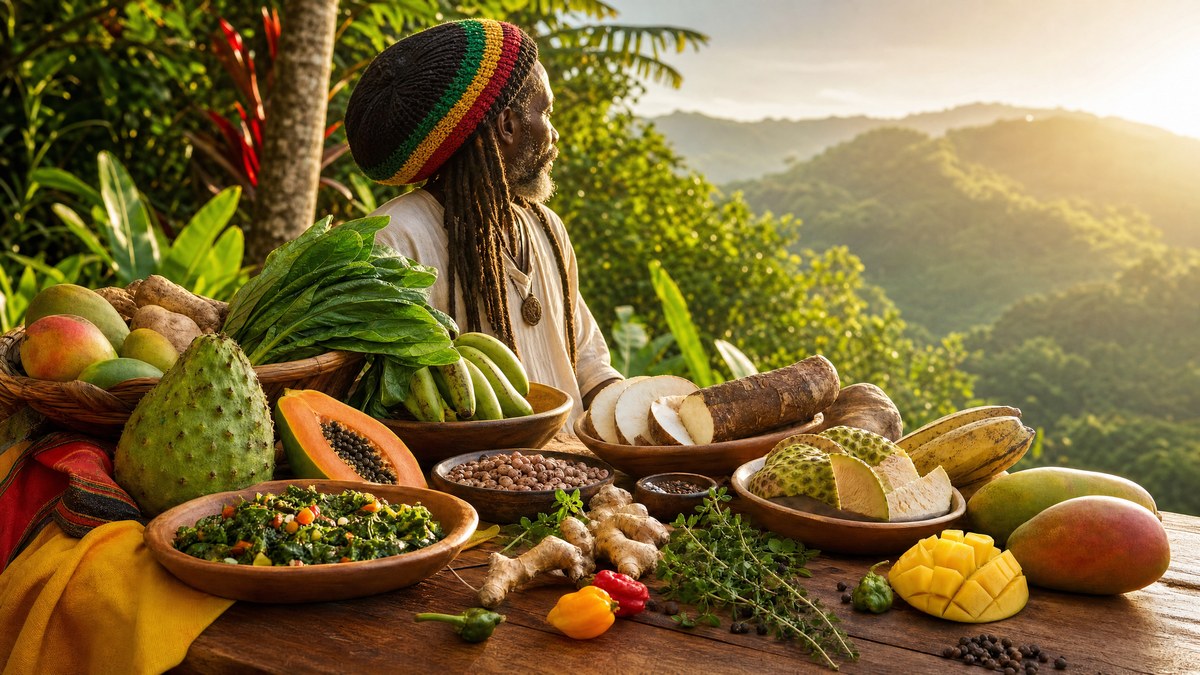
Rastafarians follow the Ital diet — a term derived from “vital.” Ital food is natural, unprocessed, and plant-based, with the goal of maximizing life force energy. Salt, chemical preservatives, synthetic additives, and artificial flavorings are strictly avoided. Most Rastafarians are vegetarian or vegan, and many avoid alcohol, tobacco, and recreational drugs, though sacramental use of cannabis, called ganja, is central to meditation and reasoning sessions.
Staples, carbohydrates, and roots: yam, cassava, sweet potato, dasheen, breadfruit, green plantain, and coco or eddoe.
Leafy greens and vegetables: callaloo, kale, pumpkin, okra, cabbage, bell peppers, and chayote.
Fruits eaten fresh or in juices: mangoes, papaya, guava, soursop, jackfruit, June plum, tamarind, and star apple.
Plant-based proteins: chickpeas, kidney beans, lentils, pigeon peas, peanuts, hemp seed where legal, and homemade tofu often made from coconut milk and chickpea flour.
Herbs and seasonings: fresh ginger, garlic, scallion, thyme, rosemary, pimento, scotch bonnet pepper used sparingly, and parsley.
Medicinal herbs brewed as teas: cerasee, soursop leaf, lemongrass, peppermint, and guinea hen weed.
What is avoided is equally important: pork, shellfish, scaleless fish, salt, processed sugar, white flour, canned goods with preservatives, and any food grown with chemical fertilizers or pesticides.
Rastafarians who can grow their own food do so in small organic farms or community gardens — a practice that ensures freshness, nutrient density, and food sovereignty.
Real-Life Long-Livers in the Rastafari Movement
Longevity data in the Caribbean is often understudied, but Rastafarian communities consistently produce elders who live well into their 90s — and beyond — with remarkable vitality and few signs of chronic disease.
Mortimo Planno, a renowned Rastafarian elder, philosopher, and community leader in Jamaica, lived to 77. While not extreme by global standards, this was notable given Jamaica’s average life expectancy at the time and his active role as a cultural bridge between Rastafarians and the wider world.
Bongo She, an elder from St. Thomas parish, Jamaica, is often cited in Rastafarian oral histories as living past 105 years old. Reports, though unverified by official records, describe him walking daily, tending his own food garden, and never visiting a hospital.
Rastafarian farmers in Jamaica’s Blue Mountains offer another compelling example. A small informal 2017 health outreach by a Kingston clinic found several men and women in their late 90s with no signs of hypertension, diabetes, or obesity. Their daily routine included growing Ital food, climbing mountain slopes, and participating in weekly reasoning sessions — hours of calm, philosophical discussion.
While large-scale epidemiological studies are lacking, these anecdotes align with the biological logic of the Ital diet and lifestyle.
Linking Rastafarian Eating Patterns to Longevity
Modern nutritional science increasingly supports what Rastafarians have practiced for nearly a century.
| Rastafarian Practice | Longevity Mechanism |
| No salt and minimal processed sugar | Lower blood pressure and reduced risk of stroke and kidney disease |
| High-fiber legumes, roots, and greens | Better gut microbiome, lower cholesterol, and protection against colorectal cancer |
| No pork or shellfish | Avoids high-saturated-fat meats and potential toxins |
| No alcohol or tobacco | Reduces cancer, liver disease, and cardiovascular mortality |
| No chemical preservatives | Lowers intake of inflammatory additives linked to metabolic syndrome |
| Home-grown organic produce | Higher polyphenol and antioxidant content |
| Intermittent fasting through two meals per day | Supports cellular autophagy and insulin sensitivity |
| Daily farming, walking, climbing, and carrying water | Maintains lean muscle mass and cardiovascular fitness |
| Strong community bonds and reasoning sessions | Lowers cortisol, reduces depression, and boosts immune function |
Key Outcome: Low Obesity Rates
In the few comparative studies available, including a 1995 Jamaican health survey and a 2012 Kingston epidemiological review, Rastafarian communities showed obesity rates significantly below the national average — often under 10%, compared to over 30% in the general Caribbean population. Rates of type 2 diabetes and hypertension were also dramatically lower, despite limited access to modern healthcare.
The reasons are straightforward: no processed junk food, no sugary drinks, minimal oil, and no salt-laden canned goods. Meals are built around whole plants, not refined carbohydrates or factory-farmed meat.
A Lesson for the Rest of the World
You don’t have to become a Rastafarian to learn from this culture. The longevity signals are clear: eat mostly plants and grow what you can; remove added salt and let herbs and spices do the work; avoid chemicals; build community; and move naturally every day through walking, gardening, climbing stairs, and participating fully in daily life.
The Rastafarian tradition has quietly preserved one of the world’s most practical, evidence-aligned longevity diets — not through labs and clinical trials, but through spiritual commitment to the body as a temple.
As the global burden of obesity, hypertension, and diet-related disease grows, perhaps it’s time we listen to the elders of the Caribbean. Their message is simple: live naturally, eat purely, and stay rooted — in the earth, and in each other.