

How Antigua and Barbuda Preserves Its Cultural Identity in a Modern World
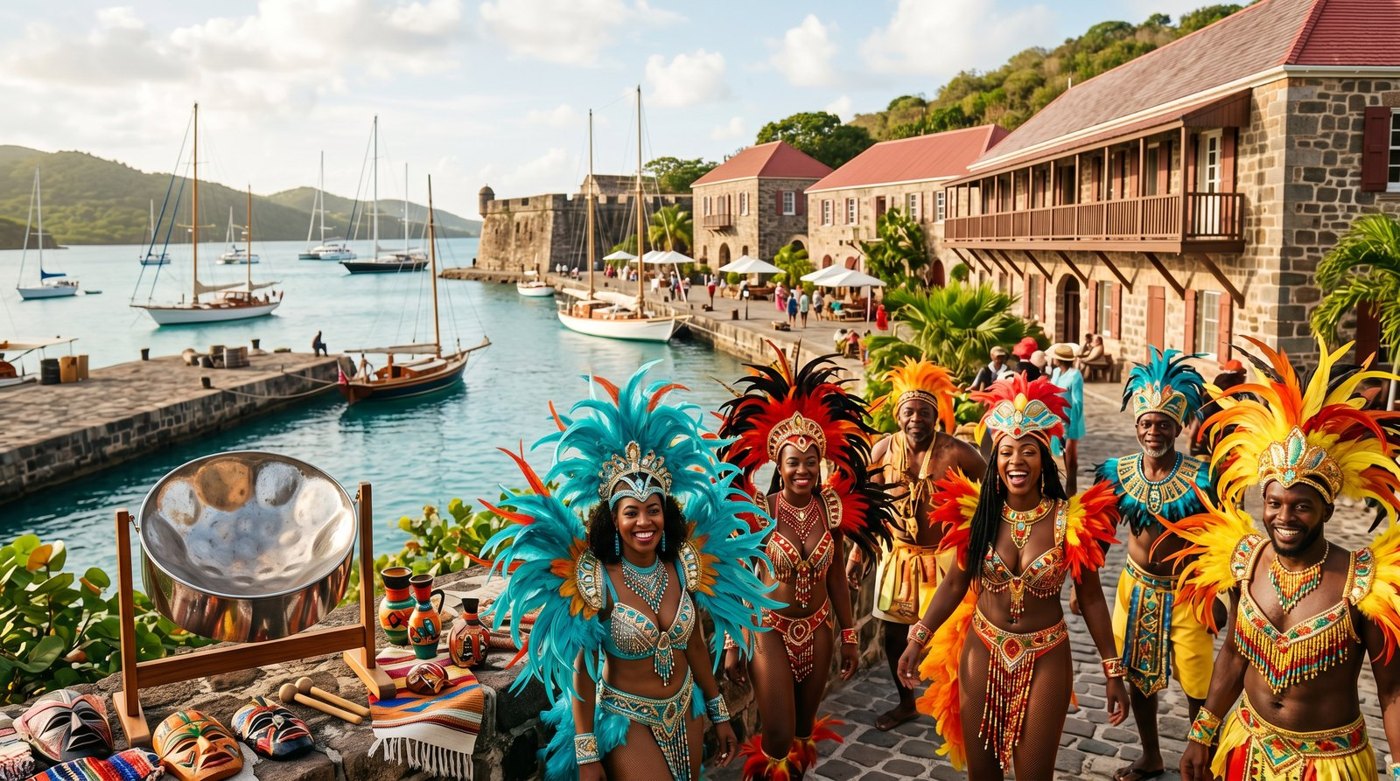
Antigua and Barbuda is often introduced to the world through its beaches, sailing culture, and famously beautiful coastline. Yet the deeper story of the twin-island nation is not only found in turquoise water or postcard views. It lives in the rhythm of Carnival, the memory of historic dockyards and sugar estates, the taste of saltfish and fungi, the architecture of old churches, the sound of steelpan, and the way communities continue to carry inherited traditions into contemporary life.
To understand Antigua and Barbuda culture is to understand a society that has learned how to preserve identity without standing still. Like much of Caribbean culture, it is shaped by African heritage, Indigenous presence, European colonial history, maritime exchange, migration, faith, music, food, and the ongoing creativity of ordinary people. What makes Antigua and Barbuda distinctive is how these influences are not treated as museum pieces. They are reinterpreted through festivals, schools, community events, tourism experiences, art, sport, cuisine, and everyday language.
In a modern world where smaller island cultures often face pressure from global media, mass tourism, and economic change, Antigua and Barbuda offers an important lesson. Cultural preservation is not simply about protecting the past. It is about making sure the past has a meaningful place in the present.
Why Cultural Identity Matters in Antigua and Barbuda
Cultural identity gives Antigua and Barbuda a sense of continuity. It connects present generations to ancestors who survived slavery, colonial rule, labour exploitation, environmental hardship, and the difficult work of building a modern nation. It also gives the country a unique voice in the region and the world. When visitors experience local music, heritage sites, food, storytelling, and community festivals, they are not just consuming entertainment. They are encountering the living memory of a people.
This matters because tourism can sometimes flatten island destinations into generic images of sun, sea, and sand. Antigua and Barbuda resists that flattening by foregrounding heritage. The country’s official tourism storytelling highlights not only beaches, but also historic forts, museums, churches, sugar estate ruins, Carnival, cricket, food traditions, art studios, and places of folklore. This approach helps visitors see the nation as a cultural landscape rather than simply a vacation backdrop.
For Antiguans and Barbudans themselves, cultural preservation is also about pride. It affirms that local ways of speaking, cooking, celebrating, worshipping, playing, and remembering are valuable. That pride becomes especially important for younger generations growing up in a digital world where global trends can arrive instantly and sometimes overshadow local knowledge.
Heritage Sites Keep History Visible
One of the most powerful ways Antigua and Barbuda preserves its identity is through historic places. These sites make the past visible and encourage both residents and visitors to ask deeper questions about power, labour, freedom, and resilience.
The most internationally recognized example is Antigua Naval Dockyard and Related Archaeological Sites, a UNESCO World Heritage property located in English Harbour. UNESCO describes the site as a collection of Georgian-period naval buildings and archaeological structures set within a protected harbour and surrounding hills. Its significance is architectural, maritime, military, and social. The dockyard tells the story of British naval strategy in the Caribbean, but it also points to the labour and skills of enslaved Africans who were central to its construction and operation.
That dual meaning is essential. Heritage preservation in Antigua and Barbuda is not only about admiring stone buildings or scenic harbours. It requires honest engagement with the systems that created those places. Sites such as Nelson’s Dockyard, Betty’s Hope, historic forts, and old sugar estate landscapes remind the nation that cultural identity was shaped in difficult conditions. They also show how people transformed hardship into endurance, creativity, and community.
Modern interpretation of these sites helps keep them relevant. Museums, guided tours, signage, restoration work, and educational programming allow heritage to become part of public conversation. When young Antiguans and Barbudans visit these places, they encounter history not as distant information, but as something connected to land, family, work, and freedom.
Carnival as a Living Celebration of Freedom
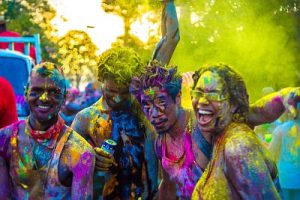
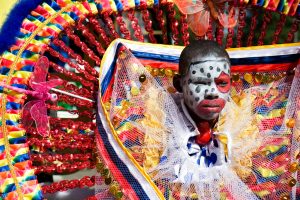
If heritage sites preserve memory in stone, Carnival preserves it in motion. Antigua’s Carnival is one of the country’s most visible cultural expressions and is officially associated with the celebration of emancipation. Held annually from late July into early August, the festival brings together music, masquerade, pageantry, food, performance, competition, and public joy.
Its cultural power lies in the way it combines remembrance and celebration. Carnival honours freedom from slavery, but it does not do so quietly. It fills the streets with colour, drums, steelpan, soca, calypso, dancing, costume design, and collective energy. This matters because Caribbean cultural memory is often carried through performance. The body, the voice, the drum, the costume, and the procession become ways of telling history.
The official tourism description of Antigua’s Carnival emphasizes events such as J’ouvert, Panorama, calypso, soca, and street parades. These are not merely attractions for visitors. They are cultural institutions. Steelpan keeps musical innovation alive. Calypso preserves social commentary and lyrical wit. Masquerade supports costume artistry, design skill, and intergenerational participation. J’ouvert keeps alive a tradition of early-morning release, satire, and public expression.
In a modern context, Carnival also shows how culture adapts. Social media, tourism promotion, recorded music, professional event production, and international audiences have changed the scale and visibility of the festival. Yet the core remains local. Carnival continues to express freedom, creativity, humour, style, and the Antiguan and Barbudan sense of belonging.
Food Preserves Memory Through Taste
Culture is often most intimate at the table. Antigua and Barbuda preserves identity through dishes that carry family memory, agricultural history, and regional connection. Foods such as saltfish and fungi, pepperpot, ducana, local seafood, seasoned rice, tamarind drinks, and bush teas reflect a blend of African, Indigenous, European, and wider Caribbean influences.
Food traditions survive because they are repeated. A recipe passed from grandparent to parent to child becomes more than a meal. It becomes a lesson in patience, resourcefulness, and belonging. Ingredients also tell stories. Saltfish speaks to maritime trade and colonial food systems. Fungi reflects cornmeal-based culinary traditions found across parts of the Caribbean. Seafood connects the islands to the surrounding Atlantic and Caribbean waters. Local seasonings and methods show how Caribbean cooks transform simple ingredients into meals rich with flavour and identity.
Modern restaurants, food festivals, hotels, and home cooks all play a role in keeping these traditions visible. The challenge is to present local cuisine with respect rather than reducing it to novelty. When food is explained through history and community, visitors gain a richer understanding of Antigua and Barbuda. They begin to see that a plate of local food is also a cultural archive.
Language, Storytelling, and Everyday Expression
Not all cultural preservation happens in formal spaces. Much of it happens in ordinary conversation. The rhythms of Antiguan and Barbudan speech, local sayings, humour, nicknames, storytelling styles, and community greetings all preserve identity in ways that are difficult to capture in official records.
Language carries worldview. It reveals how people relate to one another, how elders teach, how jokes work, how conflict is softened or sharpened, and how affection is expressed. In many Caribbean societies, oral culture has historically been a vital form of memory, especially when formal institutions did not always preserve the experiences of ordinary people. Stories told at home, in church yards, at markets, in schools, on playing fields, or during family gatherings help keep community knowledge alive.
In the digital age, this everyday expression is changing but not disappearing. Local voices now travel through radio, podcasts, social media, comedy, music, online commentary, and diaspora networks. This gives Antigua and Barbuda new ways to share culture with the world while also allowing the diaspora to remain connected to home.
Arts, Music, and Sport Keep Culture Creative
Antigua and Barbuda’s cultural identity also survives because it continues to create. Visual art, music, dance, craft, literature, fashion, and performance allow artists to interpret island life in fresh ways. This is where preservation becomes innovation. Artists do not merely repeat inherited symbols; they reshape them for new audiences and new questions.
Music remains especially important. Calypso, soca, gospel, reggae, steelpan, and contemporary Caribbean sounds provide emotional language for celebration, critique, worship, and national pride. During Carnival, music becomes public culture, but throughout the year it remains present in schools, churches, community events, radio, and private gatherings.
Sport also carries cultural meaning. Cricket, long associated with the Caribbean’s colonial history and postcolonial confidence, remains a powerful symbol of regional identity. Local games and community competitions strengthen neighbourhood bonds and give young people a way to participate in shared tradition. In this sense, cultural preservation is not limited to galleries or museums. It is also found on playing fields, bandstands, stages, and streets.
How Tourism Can Support Cultural Preservation
Tourism is one of the major forces shaping modern Antigua and Barbuda, and it can either weaken or strengthen cultural identity depending on how it is managed. When tourism focuses only on beaches and luxury experiences, it risks pushing local culture to the margins. When it includes heritage, local food, community tours, festivals, art, music, and storytelling, it can create economic value for cultural preservation.
The best cultural tourism does not ask local communities to perform a simplified version of themselves. Instead, it supports authentic experiences led by people who understand the history and meaning behind what they are sharing. Visitors who tour heritage sites, attend Carnival respectfully, purchase local art, eat local food, visit museums, and learn about community traditions contribute to a more balanced tourism economy.
This is especially important for small island states. Cultural experiences help diversify tourism beyond beach-based travel and give visitors reasons to explore more deeply. They also create opportunities for guides, artists, cooks, musicians, historians, educators, and small businesses. In that way, culture becomes not only a source of identity, but also a source of sustainable livelihood.
What Makes Antigua and Barbuda Culture Unique?
Antigua and Barbuda culture is unique because it blends historical depth with present-day confidence. The country’s identity is shaped by the memory of slavery and emancipation, the legacy of British colonial rule, African-descended traditions, maritime heritage, religious life, foodways, music, festivals, and a strong sense of community. Its uniqueness also comes from the relationship between the two islands. Antigua and Barbuda share one nationhood, but each island contributes its own landscapes, histories, community rhythms, and local pride.
Another distinctive feature is the way heritage and leisure exist side by side. A visitor may arrive for beaches and sailing, but quickly encounter dockyards, forts, Carnival, local food, and stories of freedom. This layered experience is what gives the destination cultural depth. Antigua and Barbuda is not only beautiful. It is meaningful.
Preserving Identity While Embracing the Future
The modern world will continue to change Antigua and Barbuda. Digital media, climate challenges, tourism development, migration, youth culture, and global economic pressures will all shape the future of the nation. The question is not whether culture will change. Culture always changes. The real question is whether change will remain rooted in memory, respect, and local agency.
Antigua and Barbuda’s strongest path forward is one that treats culture as a living resource. Schools can continue teaching local history. Tourism businesses can invest in authentic cultural experiences. Families can keep recipes and stories alive. Artists can reinterpret tradition. Government and community organizations can protect heritage sites. Young people can use digital tools to make local culture visible to global audiences.
This balance between preservation and innovation is at the heart of Caribbean resilience. Across the region, identity has always been created through movement, adaptation, survival, and creativity. Antigua and Barbuda is part of that wider Caribbean story, but it tells the story in its own voice.
Conclusion: A Culture That Remembers and Reimagines
Antigua and Barbuda preserves its cultural identity not by freezing the past, but by allowing it to live. Heritage sites keep history visible. Carnival turns freedom into sound, movement, and colour. Food carries memory through taste. Language and storytelling protect community wisdom. Art, music, sport, and tourism create new opportunities for expression and pride.
For readers who want to understand antigua and barbuda culture, the lesson is clear: this is a culture of remembrance and reinvention. It honours where it has come from while continuing to shape where it is going. In doing so, Antigua and Barbuda offers one of the Caribbean’s most compelling examples of how a small nation can protect its identity in a global age without losing its warmth, creativity, or sense of place.
To explore more stories about identity, heritage, and island life, visit the Exceptional Caribbean Culture, History, and Travel sections.